


Table of Contents
- The Tannic “Tea-Tini”: Using Concentrated Black Tea for Whiskey-Like Depth
- The Balsamic Berry Shrub: Utilizing Pantry Vinegars to Replicate Alcohol’s Bite
- The Marmalade Mule: Shaking Fruit Preserves for Rich Texture and Mouthfeel
- The Salty Rosemary Spritz: Muddled Herbs and Brine for a Dry, Savory Profile
- The Ginger-Chili Smash: Building Complex Heat with Common Kitchen Spices
- Cheers to Complex Flavors
- From the Bartender’s Notebook
Welcome to your kitchen, where we will transform simple ingredients into masterpieces of flavor.
Crafting a sophisticated non-alcoholic cocktail is about more than just juice; it is an exploration of balance, acidity, and aromatic complexity.
As your guide, I want to show you how to layer tastes that rival any traditional spirit-forward drink.
You do not need an expensive bar setup or years of training to master these vibrant creations.
By using fresh herbs, botanical infusions, and seasonal fruits, you can build drinks that are both healthful and deeply satisfying.
These recipes are designed for the busy parent and the aspiring host alike, focusing on clarity and ease without sacrificing elegance.
Sharing a beautiful beverage is a profound act of hospitality. When you serve these sips, you are offering a mindful experience that celebrates the joy of being together.
Let us begin this journey of taste and discovery, ensuring every guest feels cherished and every glass is filled with pure, refreshing culinary delight.
The Tannic “Tea-Tini”: Using Concentrated Black Tea for Whiskey-Like Depth


Many home bartenders struggle to find a substitute for the complex burn of dark spirits. The secret ingredient hiding in your pantry is black tea.
By over-steeping high-quality tea, we extract tannins that mimic the astringent mouthfeel of whiskey. This creates a robust base for your drinks.
This technique transforms simple ingredients into a sophisticated sipper. It adds the necessary weight to the palate that fruit juices often lack.
If you usually enjoy our homemade sweet iced tea recipes, you will love this elevated twist. It uses similar principles but intensifies the flavor profile significantly.
True flavor depth comes from the quality of extraction, not the proof of the spirit.
Mixologist’s Memo
- Double up on tea bags (use 2 for every 4oz of water) and let them steep for at least 5-7 minutes to maximize the tannic extraction.
- Always chill your tea concentrate before mixing to prevent unwanted dilution from immediate ice melt.
- Try using Lapsang Souchong tea to add a smoky, peaty dimension that perfectly replicates a high-end Scotch profile.
The Science of the Steep
To achieve the right “bite,” you must brew the tea much longer than you would for a standard cup. We want the bitterness here.
This concentrated liquid acts as the “spirit” in your shaker. It stands up to mixers without getting lost in the background.
Tea is one of the most complex ingredients we have… It has tannins, which give you that drying sensation on the palate, similar to red wine or wood-aged spirits.
Julia Bainbridge, Imbibe Magazine Interview
Mastering the Steep
- Ignore standard brewing times. Let the tea steep for 10 to 15 minutes to fully extract the tannins needed to mimic the body of a spirit.
- Embrace the squeeze. While normally considered a faux pas, squeezing the tea bag releases the extra bitterness and intensity required for a robust cocktail base.
- Taste for texture, not just flavor. You are looking for a distinct astringency that drying sensation on your tongue which ensures your drink won’t taste watery once shaken with ice.
Recipe: The Midnight Maple Tea-Tini
This recipe balances the bitterness of over-steeped tea with the woody sweetness of maple syrup. It is one of our favorite easy non alcoholic cocktail recipes.
| Feature | Standard Tea | Cocktail Concentrate |
|---|---|---|
| Steep Time | 3-5 Minutes | 10-15 Minutes ✅ |
| Water Ratio | 8 oz per bag | 4 oz per bag ✅ |
| Flavor Profile | Smooth, Delicate | Bold, Astringent ✅ |
Ingredients
- 4 oz Water (boiling)
- 2 bags Earl Grey or English Breakfast tea
- 1 oz Pure maple syrup (Grade A)
- 0.5 oz Fresh lemon juice
- 1 dash Non-alcoholic aromatic bitters
- Garnish: Lemon twist and star anise
Instructions
- Pour the boiling water over the tea bags in a heat-proof mug. Let them steep for exactly 15 minutes to extract maximum tannins.
- Remove the tea bags, squeezing out every drop of liquid. Stir in the maple syrup while the concentrate is still warm.
- Allow the mixture to cool completely. You can speed this up by placing it in the freezer for 10 minutes.
- Pour the chilled tea base, lemon juice, and bitters into a shaker filled with ice.
- Shake vigorously for 15 seconds until the outside of the shaker feels frosty.
- Strain into a chilled coupe glass. Garnish with a twisted lemon peel and float the star anise on top.
This drink pairs beautifully with savory appetizers. Try serving it alongside our easy mocktails non alcoholic summer drinks for a varied menu.
The result is a beverage that looks and feels like a classic cocktail. The dark amber hue is visually stunning and invites slow sipping.
The Bar-Cart Secret
- To achieve a silky texture, ensure you shake with large ice cubes; they provide better aeration and less dilution than crushed ice.
- For an extra layer of complexity, substitute Grade A syrup with Grade B maple syrup to intensify those woody, caramel undertones.
- If the tea concentrate feels too bitter, a tiny pinch of sea salt can neutralize the astringency without changing the flavor profile.
The Balsamic Berry Shrub: Utilizing Pantry Vinegars to Replicate Alcohol’s Bite

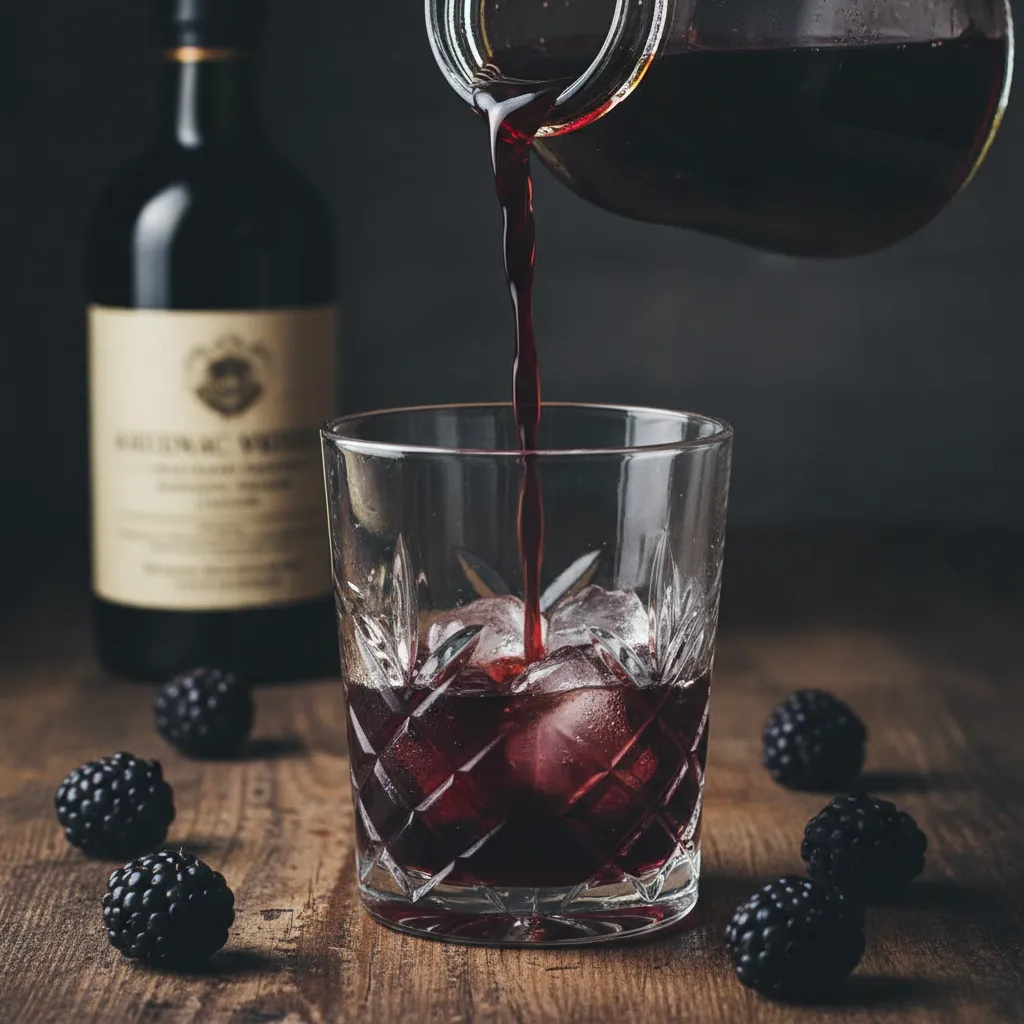
Many home cooks miss the slight burn of alcohol when switching to mocktails. That warming sensation is hard to replace with just fruit juice.
Vinegar is the secret weapon in your pantry. It provides a complex acidity that mimics the kick of spirits. This combination is known as a shrub.
A shrub is simply a syrup made of fruit, sugar, and acid. It creates a bold flavor profile that stands up to dilution with soda water.
Vinegar provides the complex ‘bite’ that fruit juice lacks, transforming a simple soda into a sophisticated cocktail.
Shrub Secrets
- Branch Out Beyond Balsamic: While dark balsamic pairs beautifully with strawberries and blackberries, try using Apple Cider Vinegar for spiced fall flavors or Champagne Vinegar for lighter stone fruits like peaches.
- The Golden Ratio: Start with a classic 1:1:1 ratio of fruit, sugar, and vinegar. If you find the bite too aggressive, let the mixture rest in the fridge for at least 48 hours before using to allow the flavors to mellow.
- Cold Process vs. Hot: For the brightest fresh fruit flavor, use the cold process method (macerating fruit in sugar first). Simmering the fruit creates a jammy flavor but releases juice faster if you are in a rush.
The Science of Sweet and Sour
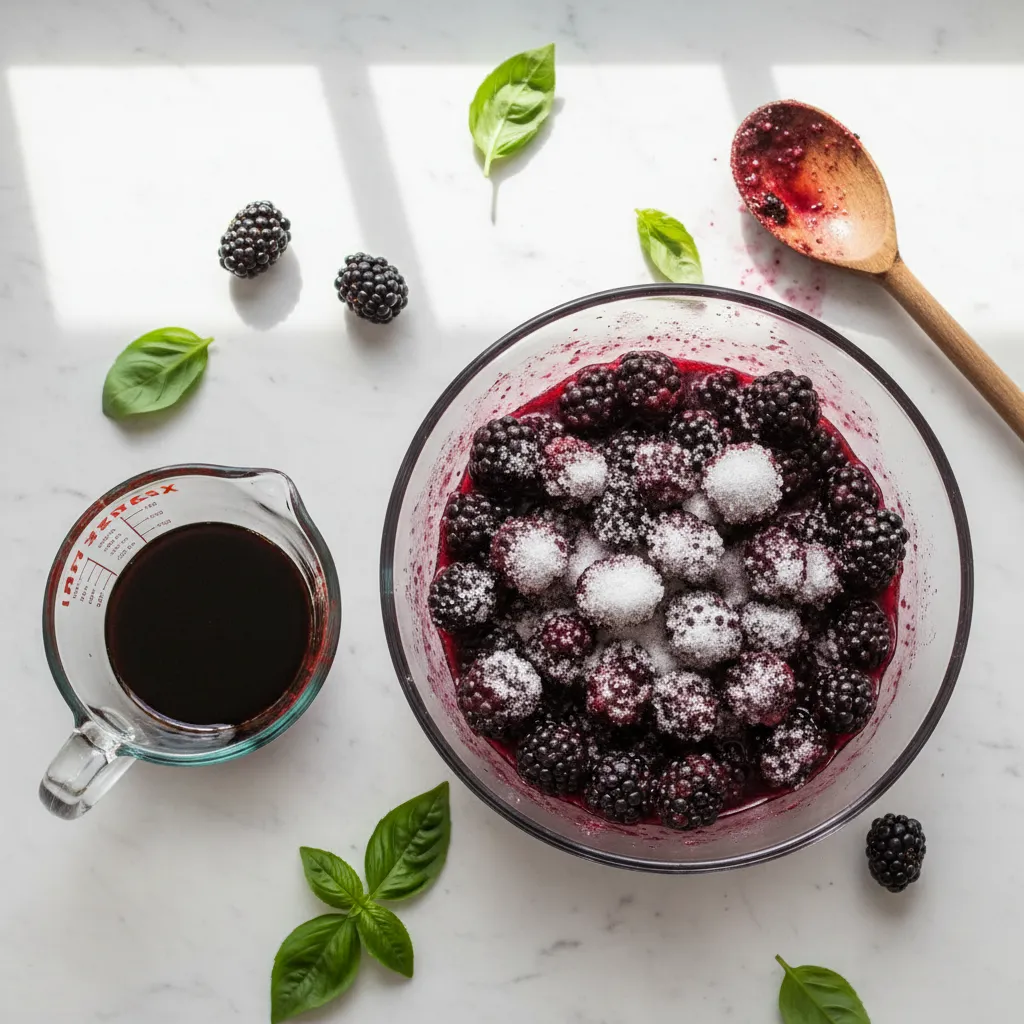
The magic happens when sugar draws the juices out of the fruit. This process is called maceration. It preserves the fresh flavor of the berries.
When you add vinegar, it balances the sweetness. Balsamic vinegar adds a deep, caramelized note that pairs perfectly with dark berries.
This technique creates a drink that feels adult and substantial. It is not just a sugary soda. It is a complex culinary experience.

If you enjoy lush non alcoholic pink drink recipes, this shrub will add a sophisticated twist to your party menu.
Mixologist’s Notebook
- For the ultimate depth of flavor, let your fruit macerate in sugar for at least 24 hours in the refrigerator before adding your vinegar choice.
- Experiment with vinegar profiles; while balsamic pairs perfectly with dark berries, try using white balsamic or champagne vinegar for a lighter, more floral strawberry shrub.
- Do not discard the leftover fruit solids after straining; the syrupy macerated berries make a sophisticated topping for Greek yogurt or vanilla bean gelato.
Classic Balsamic Blackberry Shrub Recipe
This recipe creates a concentrated syrup. You can store it in the fridge for weeks. It creates a perfect balance of tart, sweet, and savory.
Ingredients
- 2 cups fresh organic blackberries, washed and dried
- 1 1/2 cups granulated white sugar
- 1 cup high-quality balsamic vinegar
- 1/2 cup apple cider vinegar
- 1 tbsp fresh lemon zest
Instructions
- Place the blackberries and sugar in a large glass bowl. Mash them gently with a wooden spoon to release juices.
- Cover the bowl tightly with plastic wrap. Let it sit on the counter for 24 hours. The sugar should be fully dissolved.
- Stir in the balsamic vinegar, apple cider vinegar, and lemon zest. Mix until well combined.
- Strain the mixture through a fine-mesh sieve into a clean jar. Press on the solids to extract all the liquid. Discard the pulp.
- Seal the jar and refrigerate. Let the flavors meld for at least 48 hours before using. Serve 1 part shrub to 4 parts sparkling water.
The acid in a shrub stimulates the palate in the same way alcohol does, making it an ideal aperitif.
Michael Dietsch, Shrubs: An Old Fashioned Drink for Modern Times
The Shrub Master’s Tip
- Don’t discard the leftover solids! Use the macerated blackberry pulp as a sophisticated topping for Greek yogurt or as a savory glaze for roasted meats.
- For a more complex aromatic profile, try adding a few sprigs of fresh basil or rosemary to the sugar and berry mixture during the initial 24-hour maceration.
- Always use non-reactive containers like glass or ceramic; the high acidity in vinegar can react with certain metals and produce an unwanted metallic aftertaste.
Flavor Pairing Guide
Once you master the basic technique, you can experiment. Different vinegars create different moods. Use this guide to create your own signature blends.
These combinations work well when topped with club soda or ginger beer. They are perfect for easy mocktails and summer drinks.
| Fruit Base | Vinegar Type | Herb or Spice | Flavor Profile |
|---|---|---|---|
| Strawberry | Balsamic | Black Peppercorn | Rich & Savory |
| Peach | Apple Cider | Fresh Thyme | Bright & Earthy |
| Pineapple | Rice Wine | Jalapeño Slice | Tropical & Spicy |
| Blueberry | Red Wine | Lemon Peel | Deep & Tart |
Remember to use a ratio of roughly equal parts fruit, sugar, and vinegar. You can adjust the sugar down if you prefer a sharper drink.
These shrubs also make excellent glazes for roasted vegetables. Do not be afraid to use them in your cooking as well as your glass.
The Shrub Master’s Notes
- For a crystal-clear shrub, let your fruit and sugar macerate in the fridge for 24 hours before adding vinegar and straining through a fine-mesh sieve.
- Don’t toss the leftover solids! The vinegar-soaked fruit makes a tangy chutney or a punchy addition to a gourmet cheese board.
- If your shrub feels too sharp, add a pinch of salt; it rounds out the acidity and makes the fruit flavors pop instantly.
The Marmalade Mule: Shaking Fruit Preserves for Rich Texture and Mouthfeel

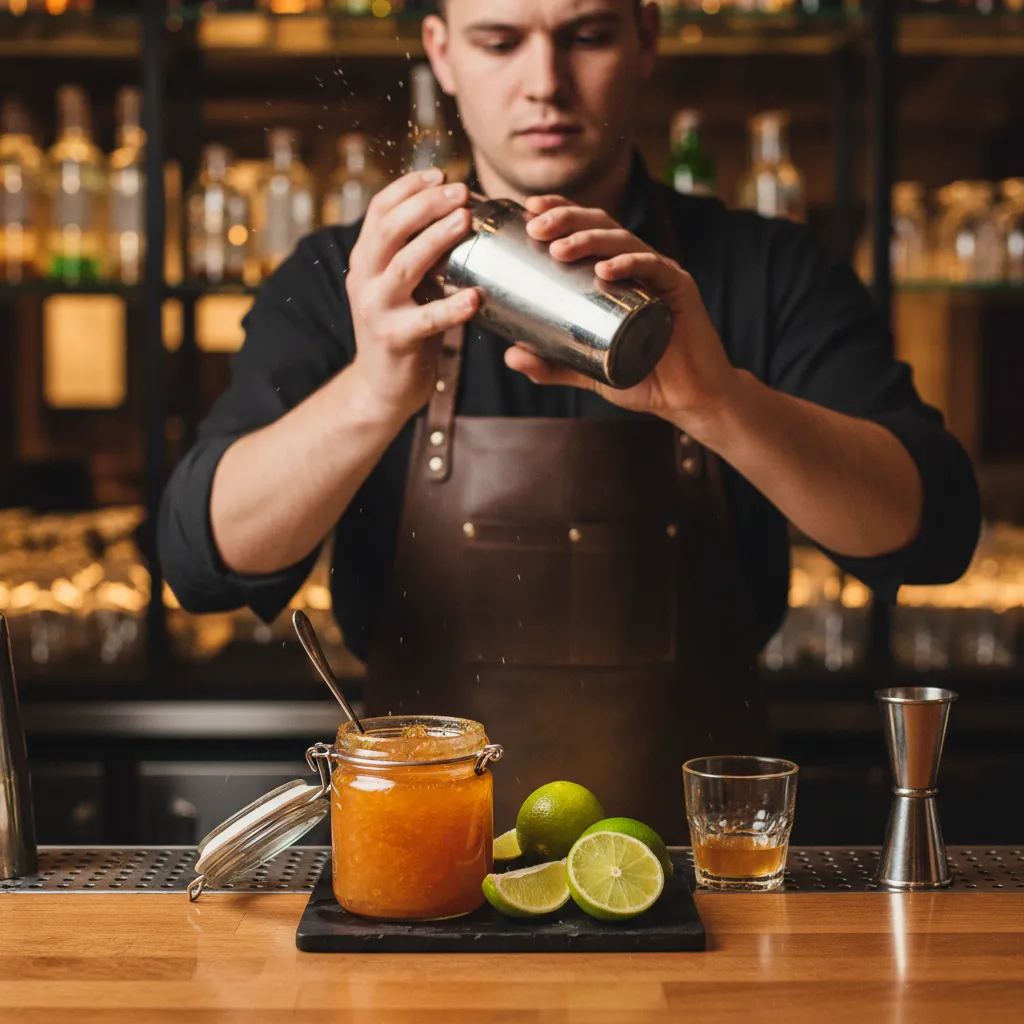
Most home bartenders reach for simple syrup to sweeten drinks. However, high-quality fruit preserves offer a secret weapon for texture.
Using marmalade adds complexity and a velvety mouthfeel. The pectin in the fruit creates a rich body that thin syrups cannot match.
Shake jam hard to unlock a creamy texture in your alcohol-free drinks.
This technique works perfectly for easy non alcoholic cocktail recipes. It mimics the weight of a traditional spirit on your palate.
The key is a “hard shake” to fully emulsify the preserves. This integrates the citrus oils and creates a beautiful foam on top.
Ingredients
- 2 tbsp Orange Marmalade (high quality)
- 1 oz Fresh Lime Juice
- 4 oz Ginger Beer (chilled)
- 1/2 cup Ice Cubes
- 1 sprig Fresh Mint (for garnish)
- 1 Wheel Dehydrated Orange
Instructions
- Add the orange marmalade and fresh lime juice to a cocktail shaker. Stir briefly with a spoon to loosen the jam.
- Add the ice cubes to the shaker. Seal the tin tight.
- Shake vigorously for at least 15 seconds. You want to break down the jam and emulsify the citrus oils completely.
- Double strain through a fine mesh sieve into a copper mug or highball glass filled with fresh ice. This catches any large fruit chunks.
- Top with the chilled ginger beer. Stir gently to combine without losing the carbonation.
- Garnish with the mint sprig and orange wheel. Serve immediately.
Preserves, jams and jellies are a great way to incorporate fruit flavors into drinks without having to worry about seasonality.
Naren Young, Liquor.com
The success of this drink relies heavily on fresh garnishes. The aroma of mint triggers the senses before you take the first sip.
If you buy a large bunch of mint for this recipe, learn how to store fresh herbs for weeks to keep them vibrant.


Choosing the Right Preserves
Different preserves create unique flavor profiles. Experimenting with various fruit bases allows you to customize the drink to your taste.
You can swap the orange marmalade for other jams found in your pantry. Just ensure they are not overly gelatinous or artificial.
| Preserve Type | Flavor Profile | Best Herbal Pairing |
|---|---|---|
| Apricot Jam | Floral and tart | Fresh Thyme |
| Fig Preserve | Earthy and sweet | Rosemary Sprig |
| Raspberry Jam | Bright and berry-forward | Thai Basil |
This method transforms pantry staples into sophisticated sips. It proves that great drinks do not require complex, homemade syrups.
Mixologist’s Notebook
- To ensure a silky smooth finish, always double strain your mixture through a fine mesh sieve. This removes any unwanted seeds or large fruit chunks while preserving the velvety mouthfeel created by the jam’s pectin.
- If your marmalade is particularly thick, pre-stir it with the citrus juice before adding ice. This loosening step ensures the preserves emulsify fully during the hard shake rather than clumping at the bottom of the tin.
- For an extra aromatic layer, clap the mint sprig between your palms before garnishing. This releases the essential oils, which perfectly complements the citrus notes of the marmalade.
The Salty Rosemary Spritz: Muddled Herbs and Brine for a Dry, Savory Profile

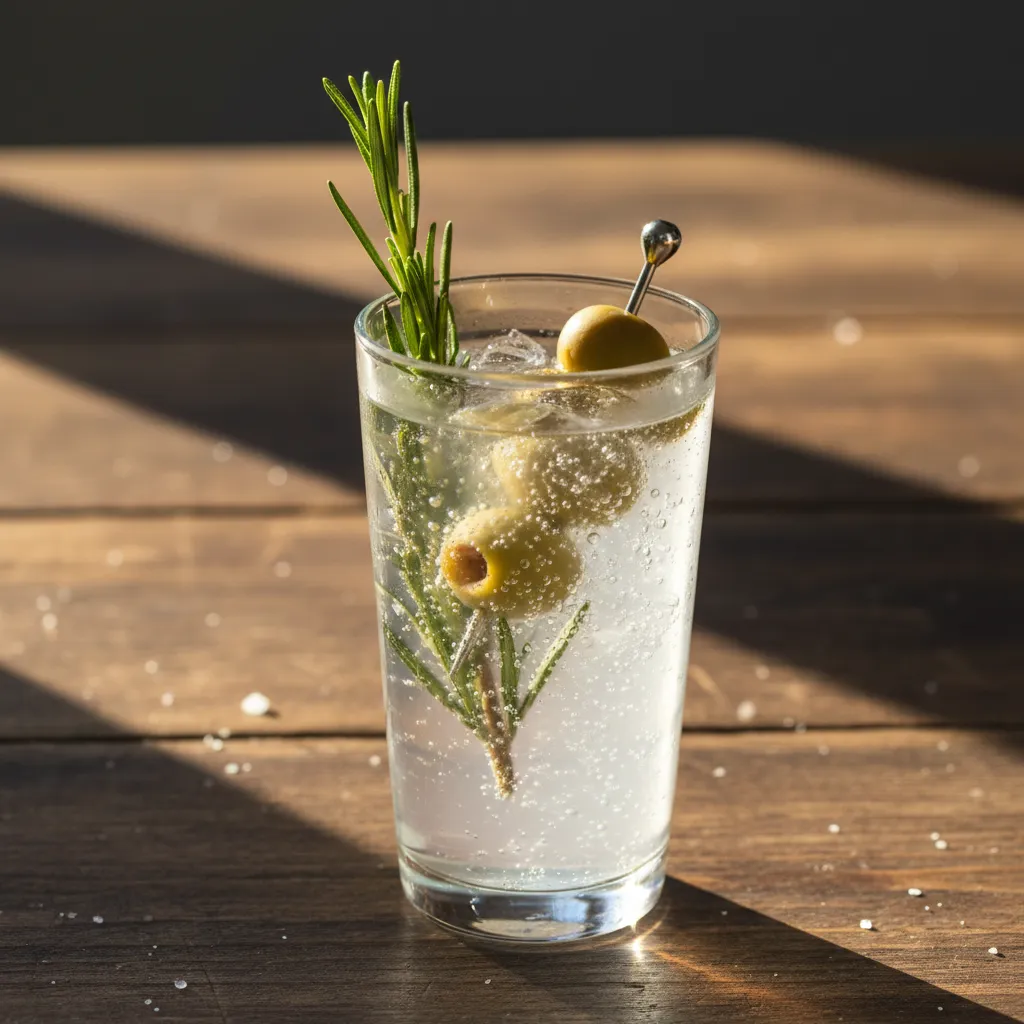
Not every mixed drink requires a sugar rush. Sometimes, the palate demands complexity over sweetness.
The Salty Rosemary Spritz answers that call. It uses brine and fresh herbs to create a sophisticated profile.
This drink mimics the dry finish of a classic dirty martini but adds a refreshing effervescence.
The key lies in fresh ingredients. Using wilted herbs will result in a muddy flavor rather than a bright one.
If you have leftover sprigs, learning how to store fresh herbs for weeks is essential.
True flavor sophistication comes from the balance of salt, acid, and aroma, not just the spirit.
We use a technique called “muddling” here. This releases the essential oils from the rosemary needles.
However, you must be gentle. Over-muddling releases bitter chlorophyll that can ruin the drink’s finish.
When you muddle herbs, you want to press the oils out of the skins, not bruise the herbs… if you shred the herbs, you’re going to get a bitter, grassy flavor.
Jeffrey Morgenthaler, The Bar Book: Elements of Cocktail Technique
This recipe is naturally sugar-free, making it a perfect option for keto or low-carb lifestyles.

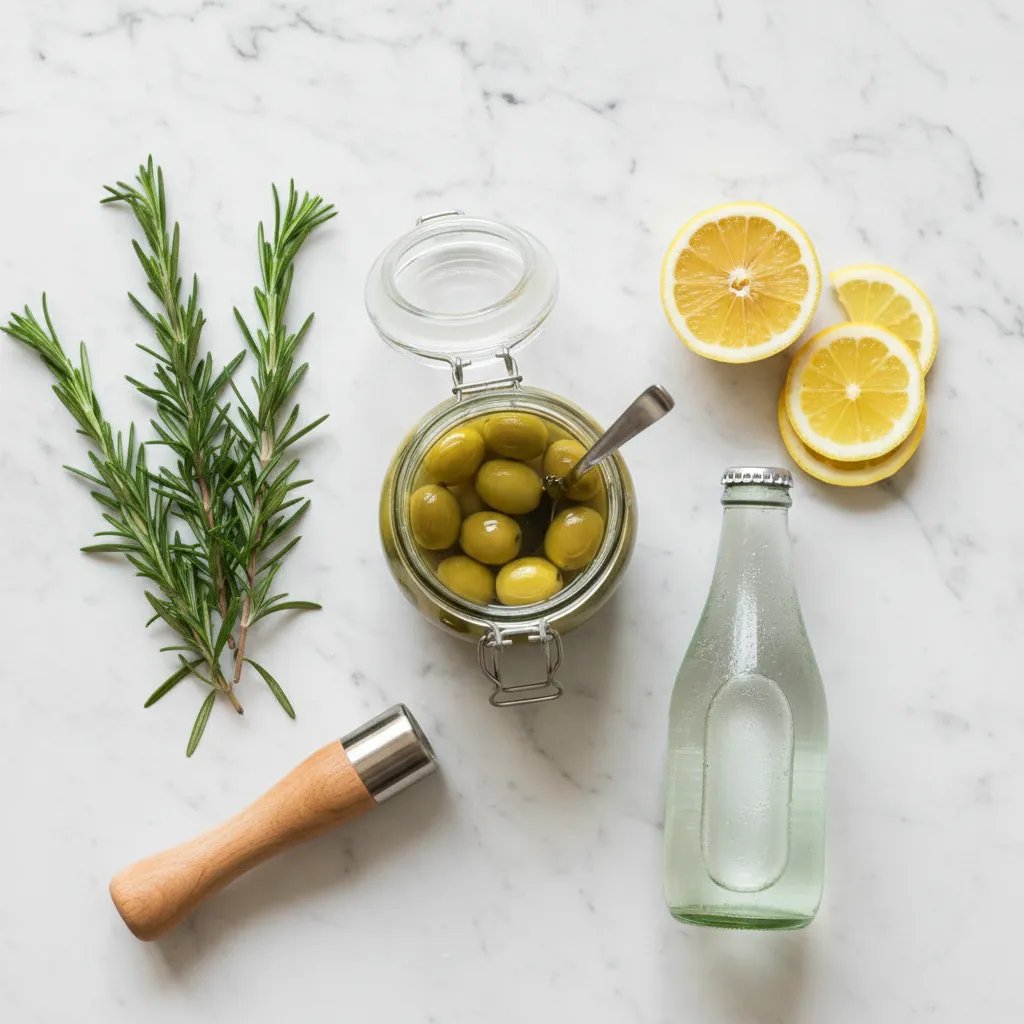
Ingredients
- 2 large sprigs fresh rosemary (one for muddling, one for garnish)
- 1 oz high-quality olive brine (from a jar of Castelvetrano olives)
- 0.5 oz fresh lemon juice
- 4 oz sparkling mineral water or club soda
- 3 green olives for garnish
- Ice cubes (large distinct cubes preferred)
Instructions
- Prepare the base: Place one sprig of rosemary and the lemon juice into a sturdy mixing glass.
- Muddle gently: Press the rosemary 3 to 4 times with a muddler just to release the piney aroma.
- Add brine: Pour in the olive brine and add a handful of ice cubes to the mixing glass.
- Chill: Stir rapidly for 15 seconds to chill the mixture and infuse the herbal flavors.
- Strain: Double strain the mixture into a rocks glass or highball glass filled with fresh ice.
- Top and serve: Top with sparkling water. Garnish with the second rosemary sprig and olives.
This drink pairs exceptionally well with heavy appetizers. The acidity cuts through rich fats easily.
If you are serving food, consider pairing this with creamy cheeses or charcuterie boards.
For a full party spread, you might explore easy party appetizers that complement salty drinks.
You can customize this savory profile easily. Here are a few aromatic variations to try next.

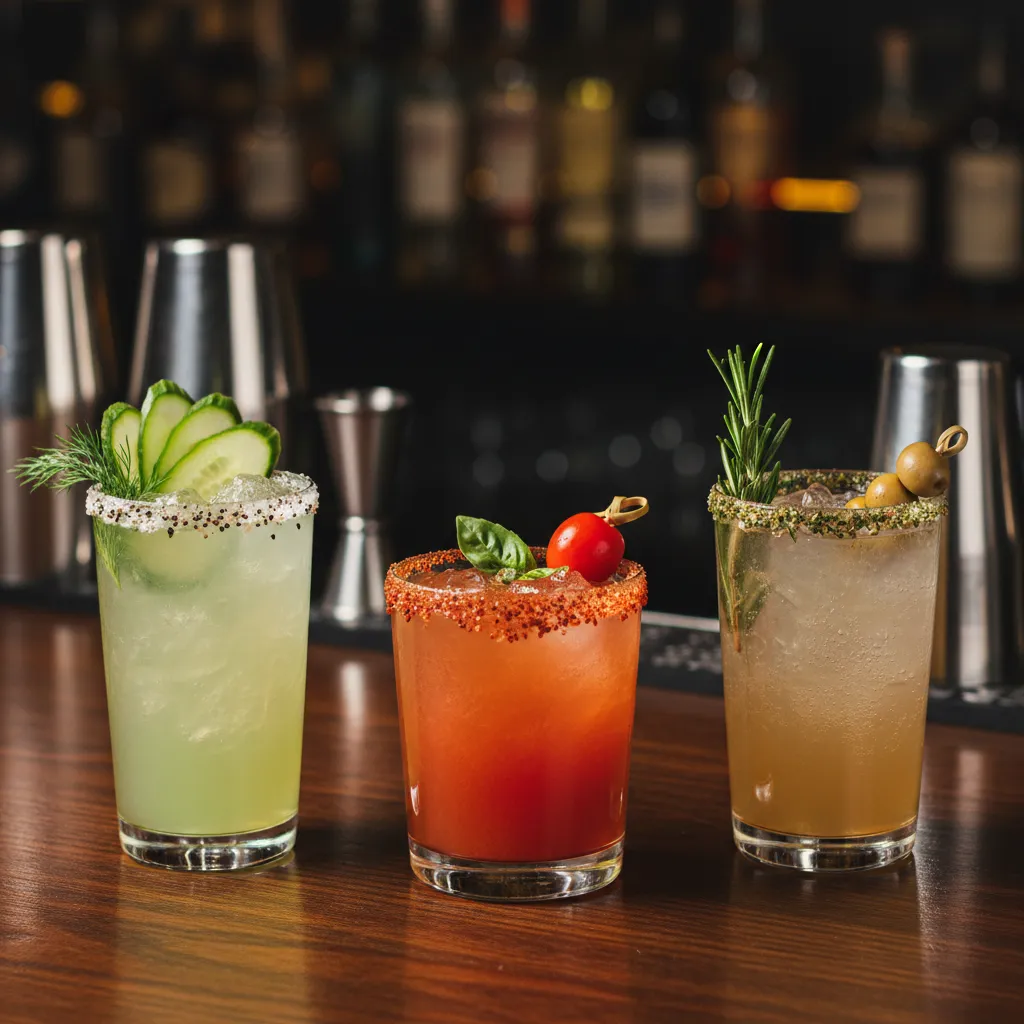
Savory Herb Variations
- The Garden Dill: Swap rosemary for fresh dill and use pickle brine instead of olive brine.
- The Caprese Fizz: Muddle two basil leaves and add a splash of tomato water for an umami kick.
- The Sage & Sea Salt: Use fresh sage and a pinch of flaky sea salt with grapefruit juice.
- The Thyme Sparkler: Replace rosemary with lemon thyme for a more citrus-forward floral note.
Using the right glassware enhances the experience. A thin-rimmed glass directs the rosemary scent to the nose.
Mixologist’s Savory Secrets
- For the most refined flavor, opt for Castelvetrano olive brine. Its buttery, mild profile balances the rosemary far better than the sharp, salty brine of standard table olives.
- To maximize the aroma without the bitterness, give your rosemary garnish a quick slap against your palm before serving. This technique releases essential oils right at the rim of the glass.
- Use large-format ice cubes if possible. They melt slower than small chips, preventing your savory brine and herb profile from becoming diluted and watery.
The Ginger-Chili Smash: Building Complex Heat with Common Kitchen Spices

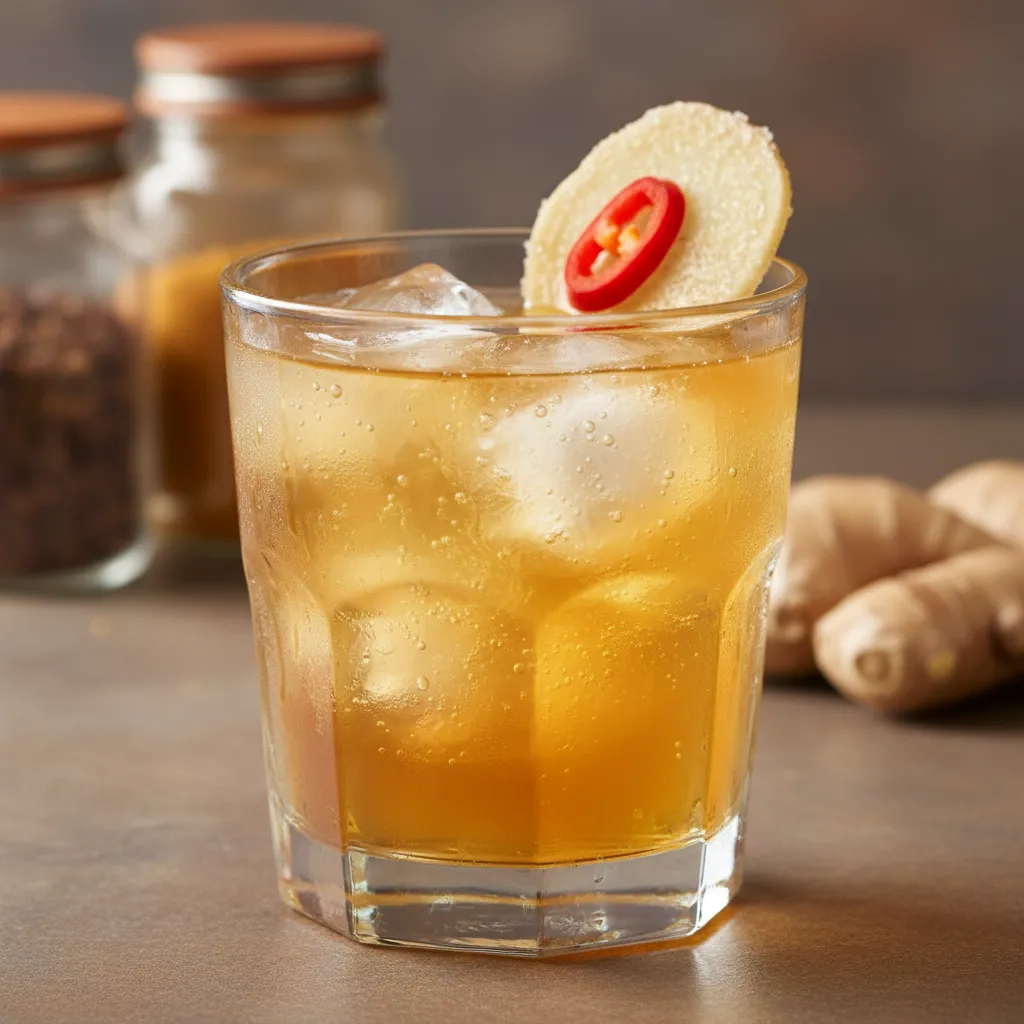
Many people miss the sensation of alcohol when switching to zero-proof drinks. That specific “burn” in the back of the throat is a key tactile element.
You can replicate this sensation using natural heat sources. Ginger provides a sharp, zesty kick that lingers on the palate.
Fresh chili peppers add a different layer of warmth. When combined, these two ingredients create a complex profile that mimics the weight of a spirit.
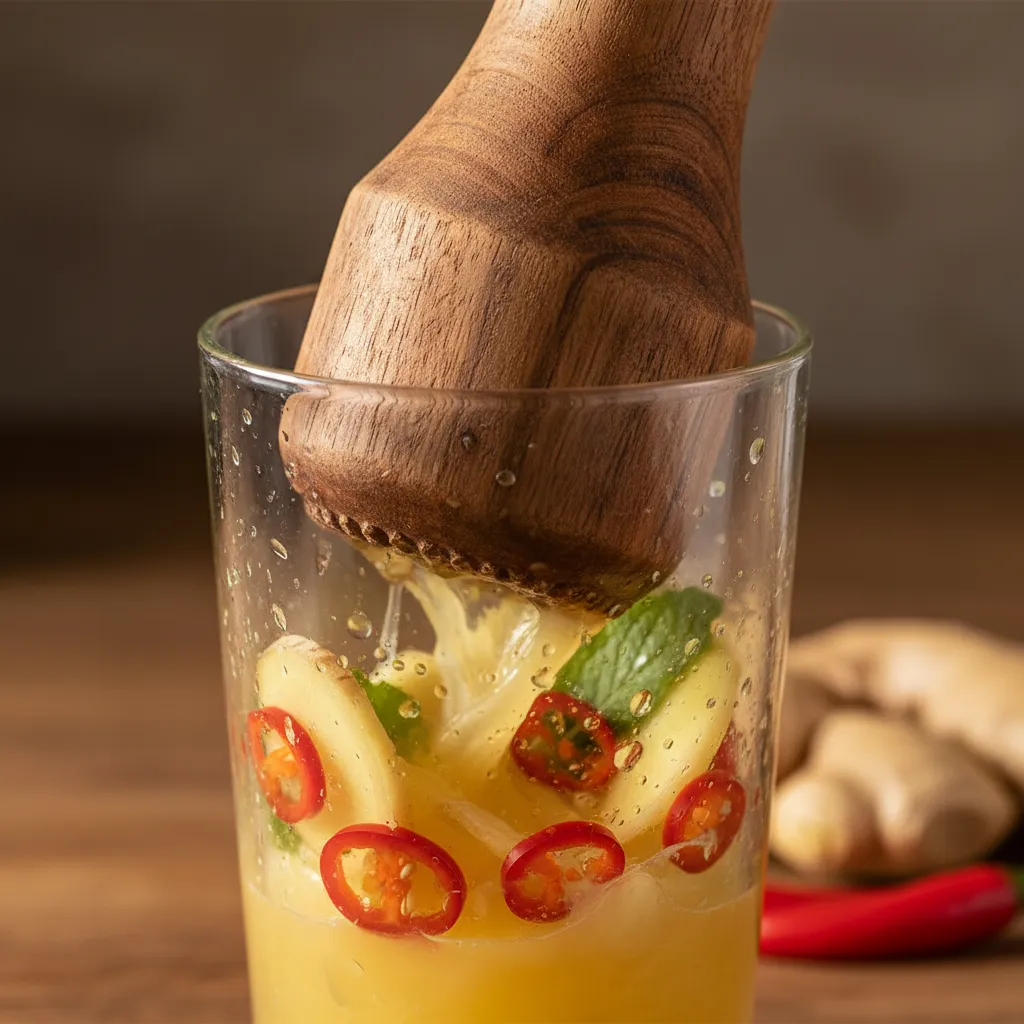
This “Smash” recipe relies on muddling to extract oils. It is vital to use fresh ingredients rather than dried powders for the best texture.
If you buy ginger in bulk for this recipe, you need to keep it fresh. Learn the best way to store fresh ginger long term to avoid waste.
Heat in a mocktail isn’t just flavor; it is the sensation that makes you sip slowly and savor the moment.

Ingredients
- 2-inch piece fresh ginger, peeled and thinly sliced
- 2 slices fresh serrano or jalapeño pepper (adjust for heat)
- 1 oz fresh lime juice
- 0.75 oz honey syrup (1:1 ratio of honey to hot water)
- 4 oz sparkling mineral water or club soda
- 1 sprig fresh mint (for garnish)
- 1 slice candied ginger (optional garnish)
Instructions
- Place the sliced fresh ginger and chili pepper slices into the bottom of a sturdy cocktail shaker or mixing glass.
- Add the fresh lime juice and honey syrup to the shaker. This liquid base helps facilitate the muddling process.
- Gently muddle the ingredients. Press down firmly to release the ginger juices and chili oils, but do not pulverize them completely.
- Add a scoop of ice to the shaker. Cap it tightly and shake vigorously for 10 to 15 seconds until the shaker feels very cold.
- Double strain the mixture into a rocks glass filled with fresh ice. Use a fine-mesh sieve to catch the small pulp and pepper seeds.
- Top with the sparkling mineral water. Stir gently once to combine the flavors without losing carbonation.
- Garnish with a fresh mint sprig and a slice of candied ginger. Serve immediately.
The beauty of this drink lies in its customizability. You can adjust the heat level to suit your guests’ tolerance instantly.
Consider these simple adjustments to control the spice profile:
- Mild Heat: Remove all seeds from the jalapeño before muddling. The seeds contain much of the capsaicin.
- Medium Heat: Use one slice of serrano pepper with seeds. Serrano peppers act quickly on the palate.
- Intense Heat: Muddle two slices of habanero for a fruity, fiery kick, but proceed with caution.
- Sweet Heat: Rim the glass with sugar and chili powder for a textural contrast with every sip.
Muddling is the technique of mashing fruits, herbs and spices… to release their juices and oils… It’s crucial to use a sturdy glass or cocktail shaker.
The Editors, Liquor.com: How to Muddle
This technique ensures that the essential oils from the ginger skin are released. These oils provide aromatic complexity that juice alone lacks.
If you have leftover lime juice or other citrus from this recipe, you can freeze it. This is a great way to prep for future drink making.
Mixologist’s Secret
- To peel your ginger like a pro, use the edge of a metal spoon instead of a knife. This allows you to navigate the nooks and crannies of the root without losing any of the precious, spicy flesh.
- Before adding your mint garnish, place it in one palm and slap it with the other hand. This simple move releases the essential oils on the surface, ensuring the aroma hits your nose before the heat hits your tongue.
- If your drink ends up too spicy, add a small pinch of salt. Salt helps to neutralize the perception of heat while enhancing the bright citrus notes of the lime.
Cheers to Complex Flavors
Crafting memorable drinks doesn’t require high-proof spirits. It simply demands respect for your ingredients and a love for bold tastes.
By harnessing the deep, tannic power of over-steeped black tea, you create a sophisticated base that stands tall in any glass.
So grab your shaker and plenty of ice. It is time to enjoy a cocktail that tastes as complex and rewarding as the real thing.
From the Bartender’s Notebook
Absolutely. You can brew a large batch of the concentrate and keep it in the fridge. It stays fresh and potent for up to one week.
Honey adds a nice floral note, but brown sugar syrup is better for depth. It mimics the rich, molasses profile needed for a whiskey vibe.
Traditional bitters have trace alcohol. For a strictly 0.0% drink, look for brands specifically labeled as glycerin-based or non-alcoholic.
Green tea is too grassy to mimic whiskey. However, it makes a wonderful substitute for gin-based mocktails if you want something lighter.