


There is nothing quite like the burst of a perfectly ripe, sun-drenched strawberry or the delicate sweetness of a fresh raspberry.
These vibrant gems are the crown jewels of the kitchen, bringing life to every breakfast bowl and dessert plate.
However, their beauty is notoriously fleeting; without the proper care, they can succumb to fuzzy mold before you even have a chance to enjoy their peak flavor.
As a chef, I believe that honoring the ingredient starts the moment you bring it home.
Master the art of the vinegar bath and proper ventilation to ensure your harvest stays plump and juicy for days or even weeks.
It is not just about preservation; it is about protecting the nutritional integrity and the bright, zesty essence that makes these fruits so special to share with your family.
Let us walk through the essential techniques to keep your berries pristine and ready for your next culinary masterpiece.
By following these simple, time-tested steps, you will eliminate waste and always have the freshest ingredients at your fingertips.
Together, we will make sure every bite is as delicious as nature intended.
The Vinegar and Water Soak Method

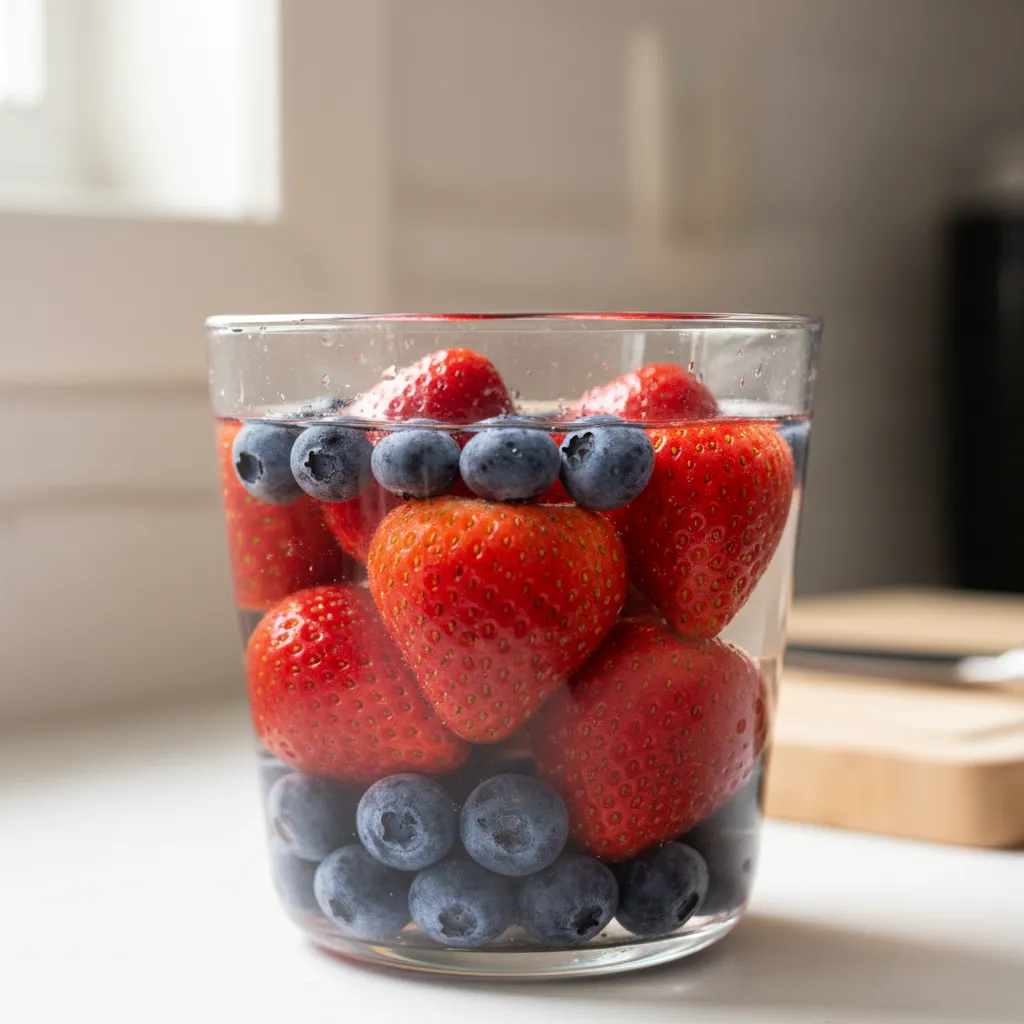
Washing your fresh harvest in a simple acidulated bath is a game changer. The mild acidity neutralizes naturally occurring mold spores on the skin.
This quick treatment extends the shelf life of your delicate fruit by several days. It leaves no lingering sour taste, preserving that pure flavor.
A simple vinegar bath is the secret to keeping your berries vibrant, plump, and entirely mold-free.
Just as you might optimize the best way to store fresh ginger long term, storing fruit requires a thoughtful approach.
Ingredients
- 3 cups cold filtered water
- 1 cup distilled white vinegar
- 2 pints fresh berries (strawberries, blueberries, or raspberries)
Instructions
- Combine the cold water and distilled white vinegar in a large, clean mixing bowl.
- Gently submerge the fresh fruit into the solution, allowing them to soak for exactly five minutes.
- Carefully lift the fruit from the bath and place them in a colander to drain.
- Rinse thoroughly under cool, running water to remove any residual acetic acid.
- Spread the washed fruit in a single layer on a clean kitchen towel to air dry completely.
Washing berries in a dilute vinegar bath helps destroy bacteria and mold spores, significantly extending their shelf life.
America’s Test Kitchen, How to Store Berries

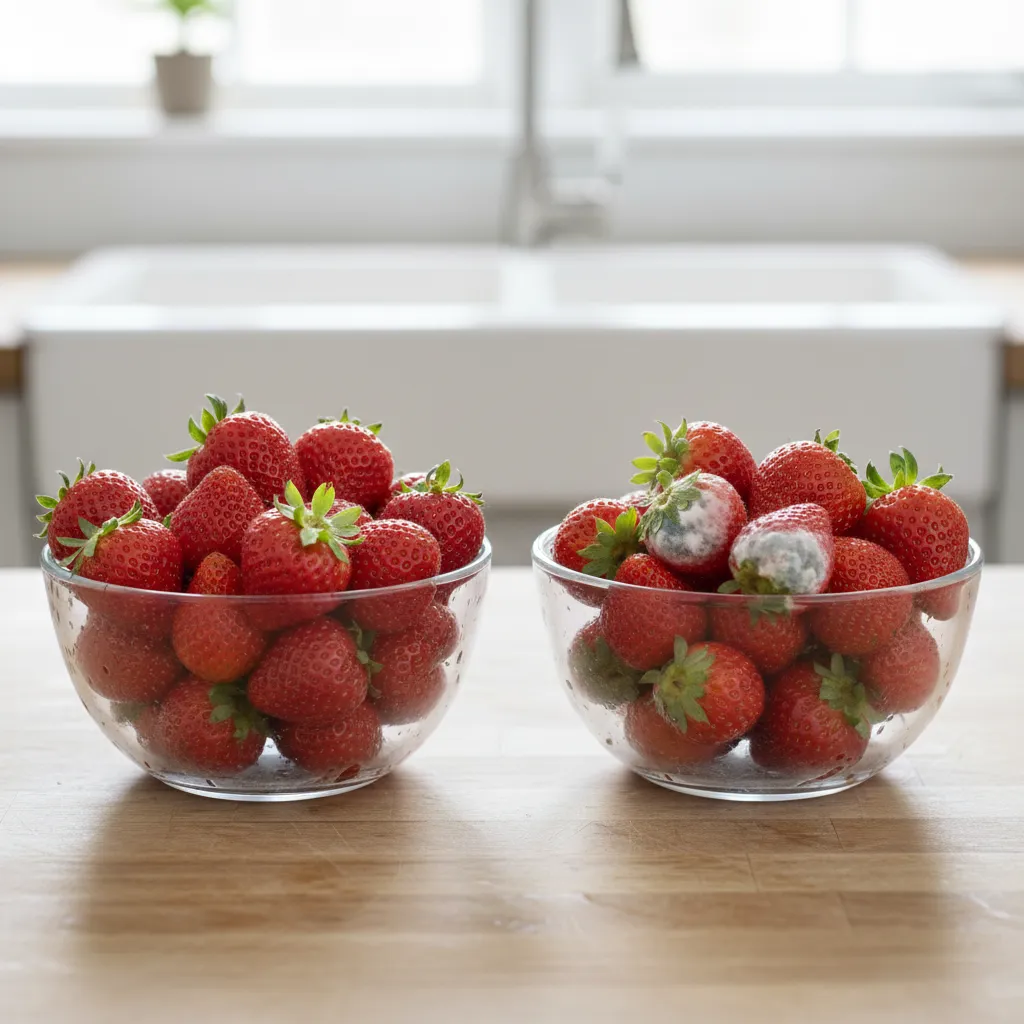
Vinegar Wash vs. Plain Water Wash
Comparing cleaning methods helps you understand the profound impact of mild acetic acid on delicate fruit skins.
| Feature | Vinegar Solution | Plain Tap Water |
|---|---|---|
| Mold Prevention | ✅ Highly effective | ❌ Ineffective |
| Removes Spores | ✅ Yes, neutralizes spores | ❌ Merely rinses dirt |
| Shelf Life | ✅ Extends up to a week | ❌ Rots within days |
| Flavor Impact | ✅ None after a final rinse | ✅ None |
Berry Freshness Hacks
- Dry Thoroughly: Moisture is the enemy of fresh fruit. After the vinegar bath and rinse, use a salad spinner lined with paper towels to gently but effectively remove excess water before air-drying.
- Maintain the Ratio: Stick strictly to the 3-to-1 water to distilled white vinegar ratio. This ensures the acidulated bath is strong enough to neutralize mold spores without leaving a lingering sour aftertaste.
- Keep the Stems On: If you are washing strawberries, leave the green caps on during the soak. Removing them exposes the delicate interior to the vinegar solution, which can degrade the fruit faster and affect the flavor.
The Hot Water Thermotherapy Wash
The hot water thermotherapy wash is a culinary secret that stops mold in its tracks.
This method uses precise heat to destroy mold spores without cooking your delicate fruit.
It is the best way to store fresh berries long term to prevent mold while keeping them firm.
A brief immersion in hot water can significantly delay the growth of mold on fresh berries.
Harold McGee, The New York Times
By exposing your wholesome harvest to a brief, controlled heat shock, you extend their life.
Studies demonstrate this simple heat treatment increases berry shelf life by up to 14 days.
This makes the method as essential as knowing how to store fresh herbs for weeks.
Mastering the hot water berry bath is your ultimate defense against premature kitchen waste.

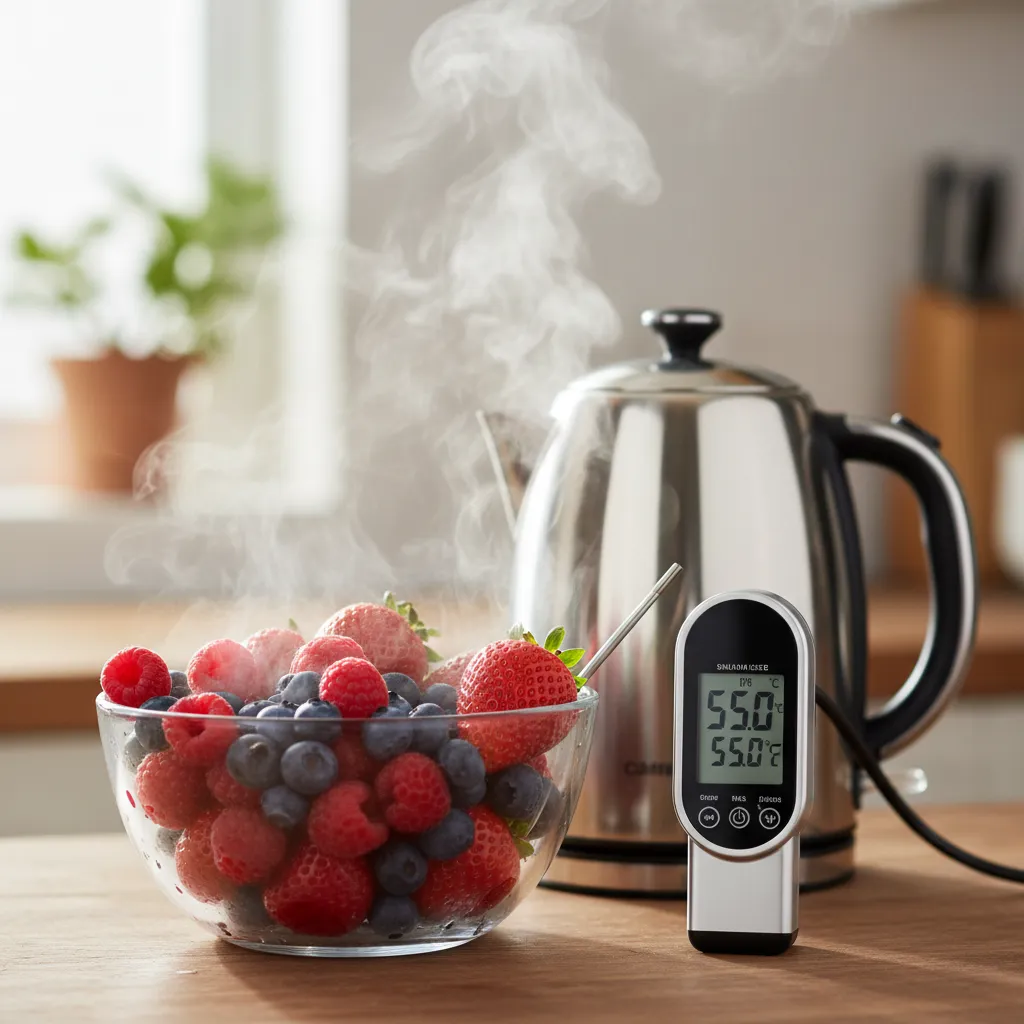
Ingredients
- 2 cups of your favorite fresh organic berries
- 4 cups of hot water (heated to exactly 125°F)
- 1 tbsp of white vinegar (optional)
- 3 cups of ice water (for the shocking bath)
Instructions

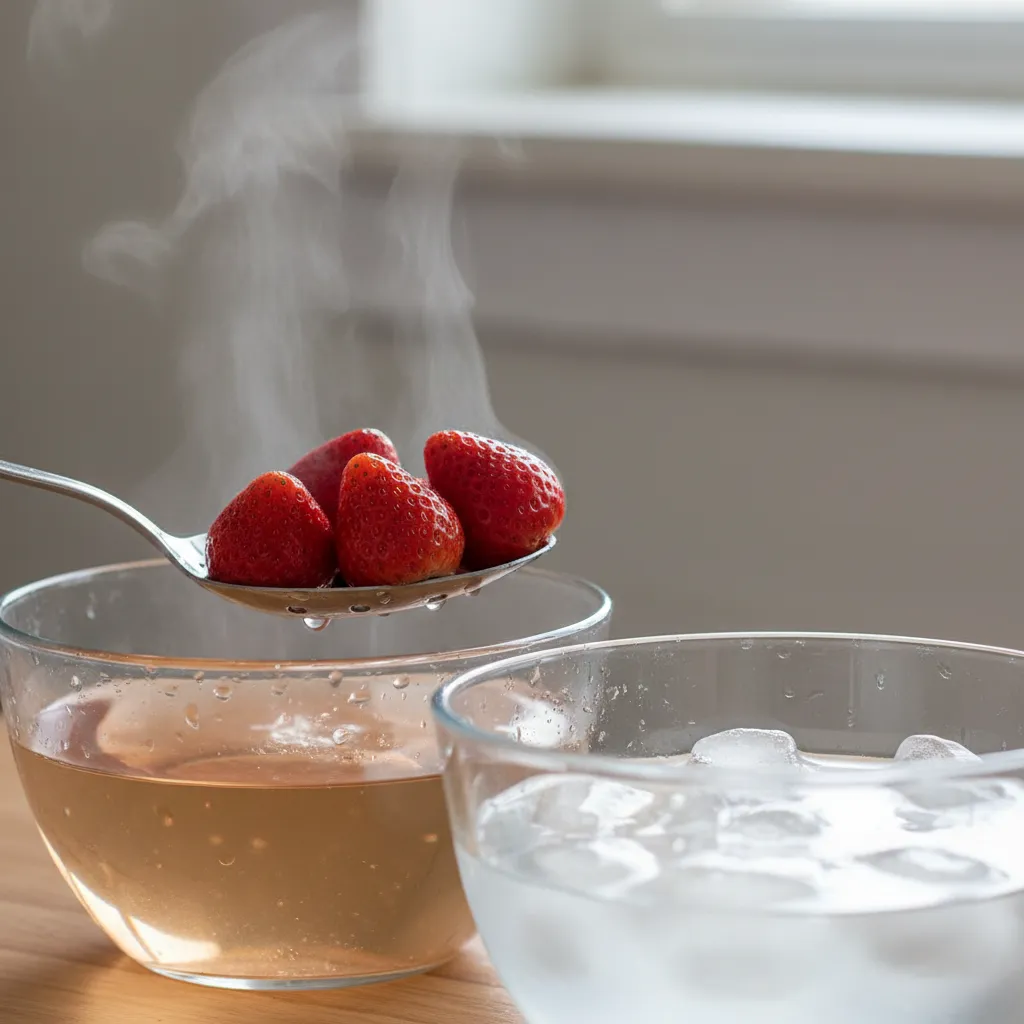
- Heat your water to exactly 125°F using a reliable digital kitchen thermometer.
- Gently submerge the fresh berries into the warm water bath for exactly 30 seconds.
- Remove the berries quickly with a slotted spoon to prevent them from becoming soft.
- Plunge the warm fruit immediately into the ice water bath to halt the heating process.
- Spread the berries on a clean towel and let them air-dry completely before storing.
This process acts like a gentle blanch, ensuring your fruit remains perfectly plump.
You will love having pristine fruit ready for your favorite plant-based smoothies.
They also stay beautifully firm for healthy strawberry no churn ice cream recipes.
Always remember that excess moisture is the absolute enemy of stored artisanal produce.
Your mise en place is not complete until every single berry is thoroughly air-dried.
Produce Prep Secrets
- Watch the Temp: Use a high-quality digital thermometer. If the water gets even a few degrees hotter than 125°F, you risk cooking the delicate fruit and turning it mushy.
- Speed Up Drying: Place your cooled berries in a salad spinner lined with a clean paper towel and give them a very gentle spin to whisk away excess water before air-drying.
- Breathable Storage: Once completely dry, store your berries in a glass container lined with a fresh paper towel, leaving the lid slightly cracked to allow for proper airflow.
The Paper Towel Moisture Absorption Trick

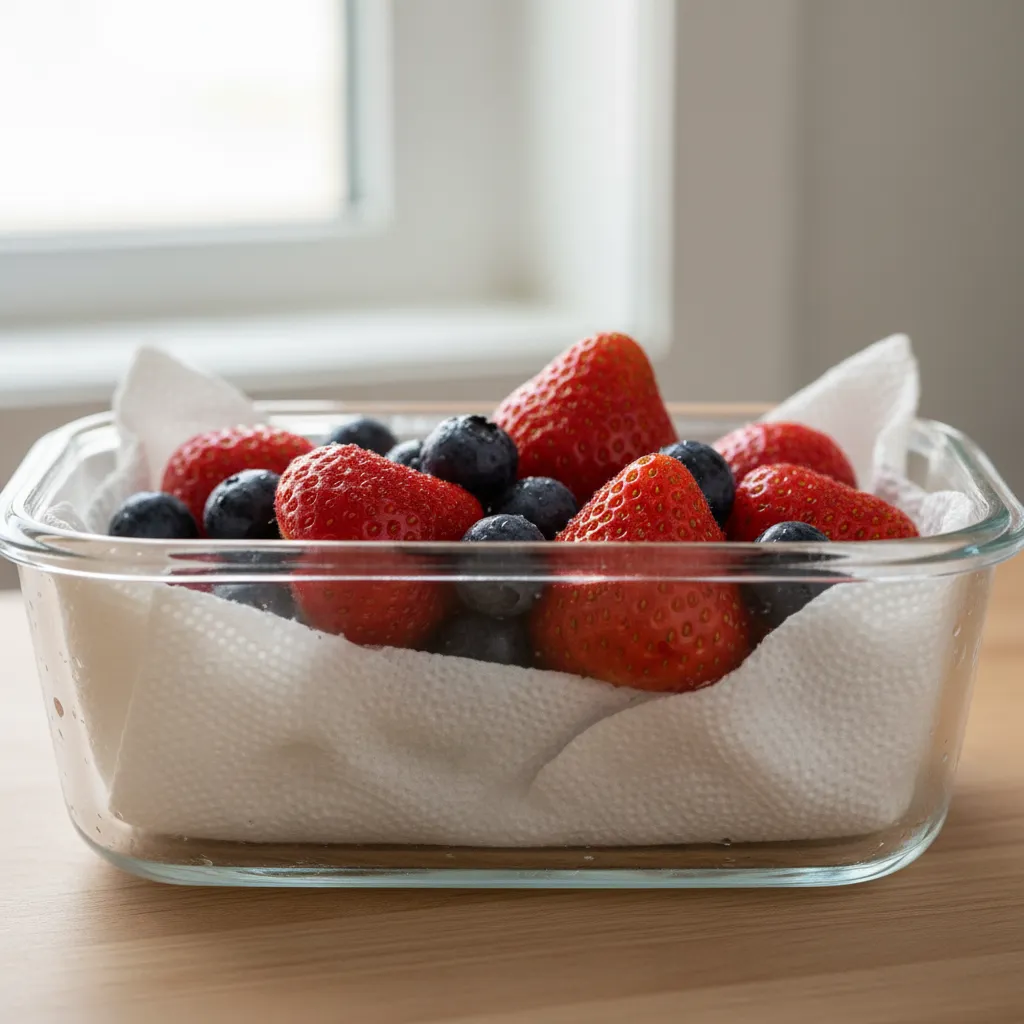
Moisture is the ultimate enemy of fresh, organic produce. Excess water turns your wholesome berries into a fuzzy, moldy mess in mere days.
Studies show reducing surface moisture can extend fruit life by up to 50 percent, according to the University of California.
To protect your palate and budget, we rely on the paper towel trick. This simple, elegant method will transform how you preserve ingredients.
Lining your storage container with a dry paper towel helps absorb excess moisture, preventing the damp environment where mold thrives.
Culinary Team, MasterClass
Just like managing condensation when you store fresh herbs, proactively absorbing excess humidity is crucial for delicate fruits.
A simple paper towel is your absolute best defense against soggy, rapidly molding berries.

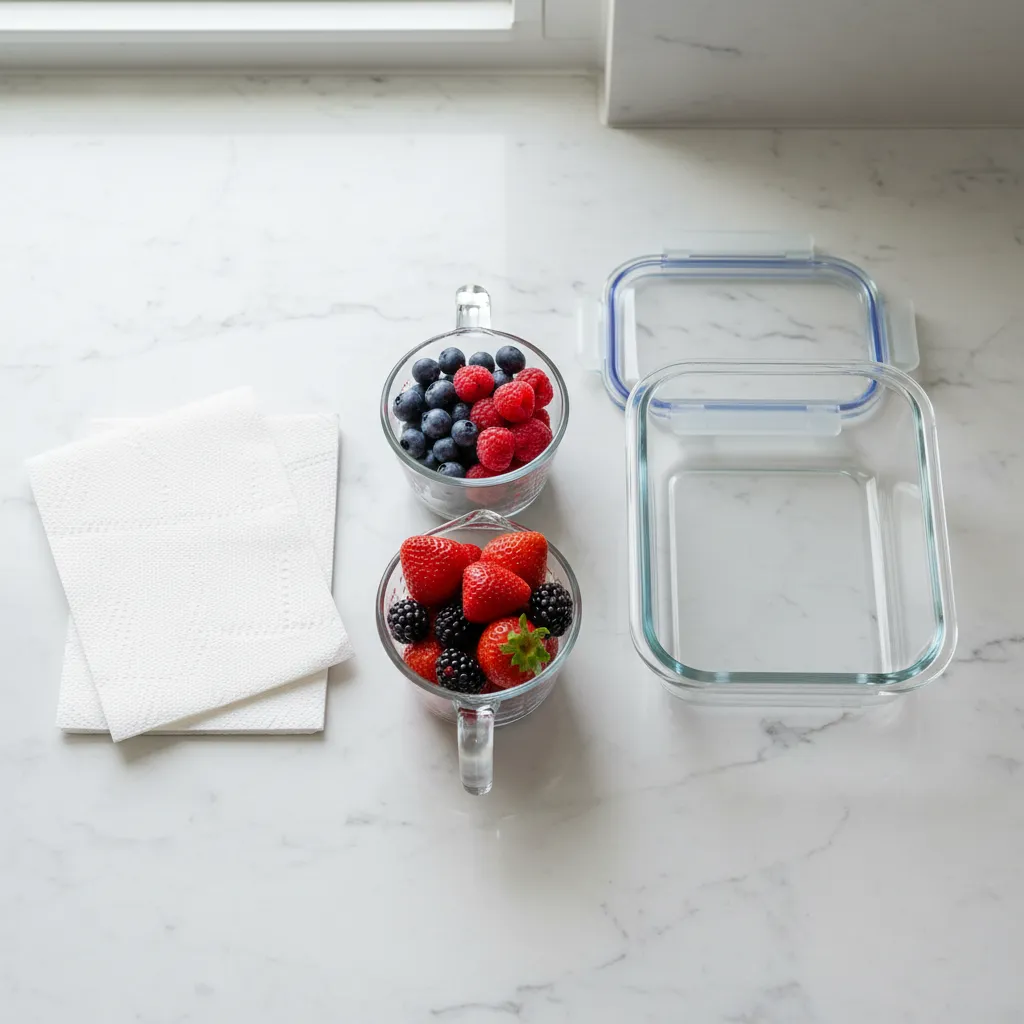
Ingredients
- 2 cups fresh organic berries (unwashed)
- 2 sheets heavy-duty paper towels
- 1 airtight glass storage container
Instructions

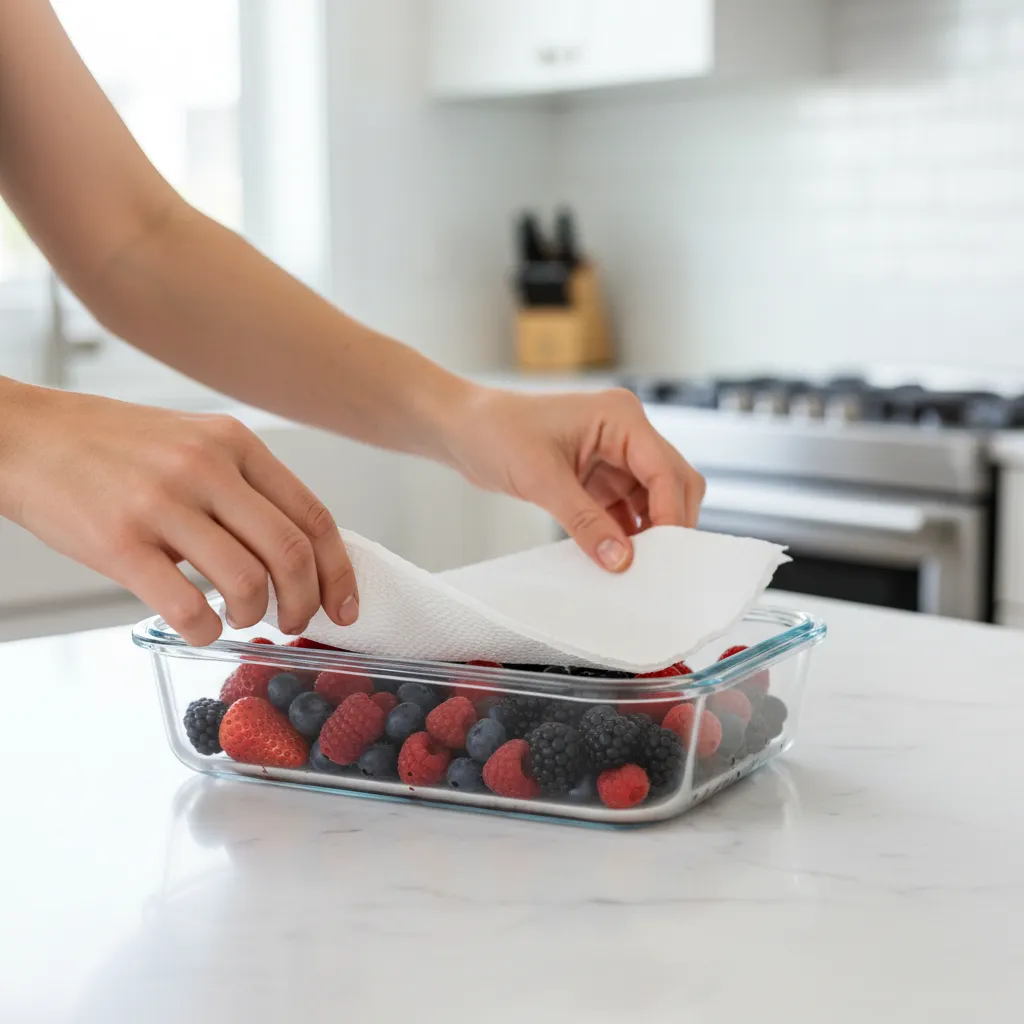
- Start your mise en place by thoroughly drying the glass container.
- Fold one paper towel to perfectly fit the bottom of your container.
- Place the fresh berries in a single layer on the paper towel.
- Do not crowd the berries; air circulation prevents a savory disaster.
- Fold the second paper towel and place it gently over the berries.
- Seal the container and place it in the crisper drawer of your fridge.
To ensure maximum freshness and prevent spoilage, remember these crucial tips before you begin the long-term storage process:
- Use unbleached, food-safe paper towels to avoid chemical transfer.
- Replace the paper towel every three days if it feels damp to the touch.
- Never wash berries before storing; water invites rapid decay.
<Visual Cue: Bright natural light highlighting a glass container filled with plump berries on a crisp white paper towel.>
Culinary Team Secrets
- Skip the pre-wash: Water is the enemy of freshness. Never wash your berries before storage; wait until just before serving to prevent a fuzzy disaster.
- Choose your towels wisely: Always opt for unbleached, food-safe paper towels to avoid any unwanted chemical transfer to your organic produce.
- Practice perfect spacing: Treat your berries like delicate ingredients. Keep them in a single layer to ensure the air circulation needed to halt rapid decay.
The Breathable Glass Jar Technique

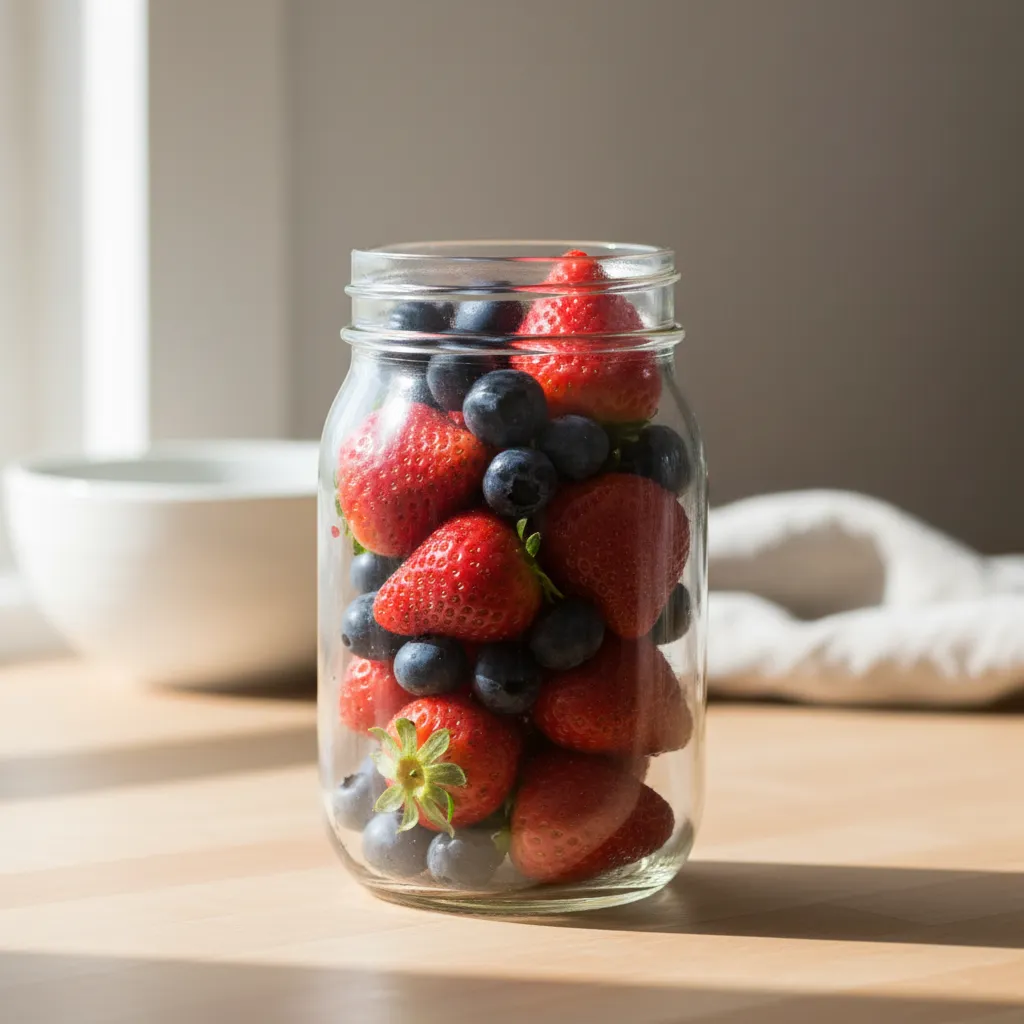
Glass jars offer a truly pristine environment for your delicate summer fruits.
They naturally resist retaining stubborn odors and provide wonderful visibility.
However, traditional airtight sealing is a fast track to mushy and moldy produce.
The secret is modifying your beautiful jars to allow just enough gentle airflow.
This simple technique strikes the perfect balance for your organic sweet harvest.
It keeps your wholesome berries crisp and bursting with vibrant flavor for weeks.
Organizing these containers adds a gorgeous aesthetic to your Virtual Pantry shelves.
Plant tissues continue to respire after harvest. Sealing them in airtight containers traps moisture and accelerates spoilage.
Harold McGee, On Food and Cooking: The Science and Lore of the Kitchen
A breathable glass jar transforms berry storage from a frustrating race against time into a beautiful display of long-lasting freshness.

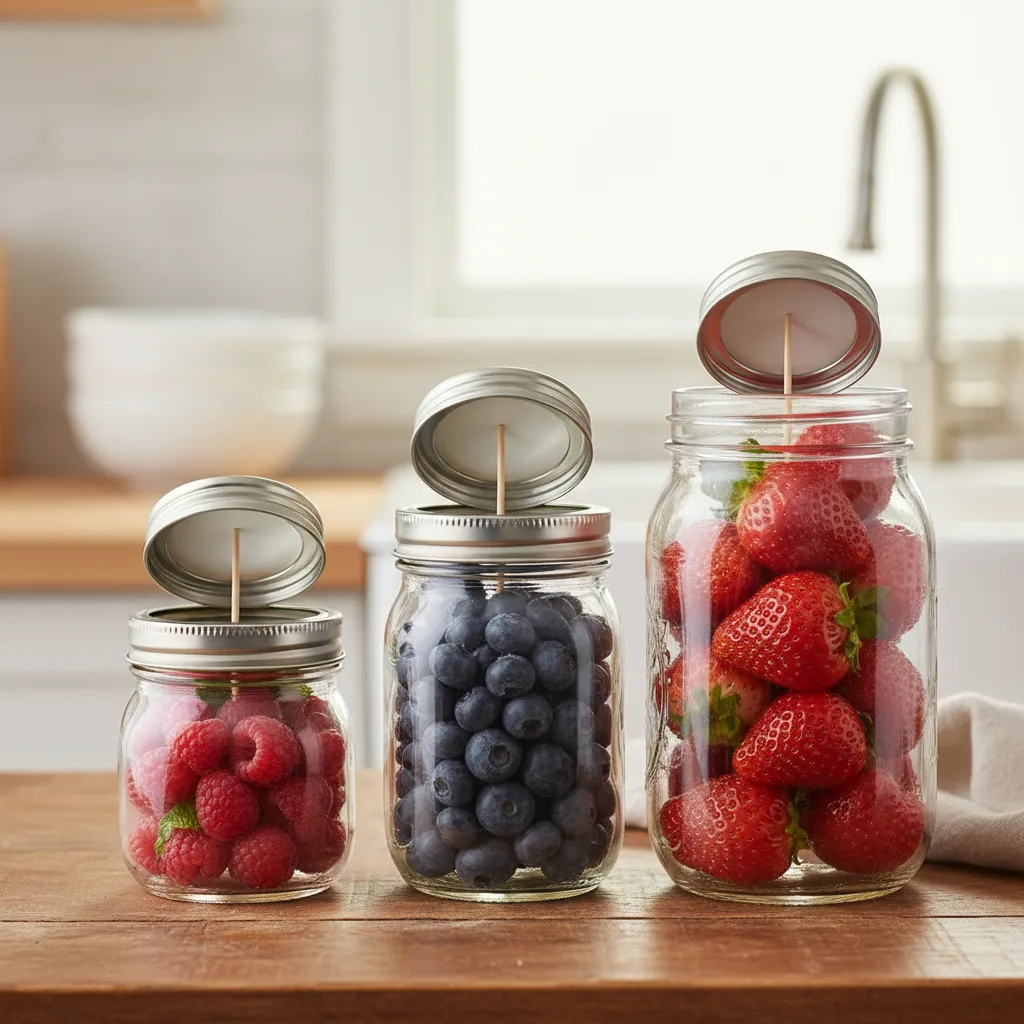
Optimal Jar Sizing Guide
Selecting the correct vessel size is crucial for preventing unwanted crushing.
Delicate raspberries require much shallower containers than sturdy strawberries.
Use this simple guide to choose the right glass home for your artisanal market finds.
| Berry Type | Optimal Jar Size | Packing Technique |
|---|---|---|
| Strawberries | Quart (32 oz) | Loose, layered with gentle care |
| Blueberries | Pint (16 oz) | Medium density, gently shaken |
| Blackberries | Pint (16 oz) | Loose, do not press down at all |
| Raspberries | Half-Pint (8 oz) | Very loose, single layers only |
Ready to prep your fruit? Follow this exact method to ensure ultimate longevity.
Once properly stored, these will be perfect for your Easy Healthy Spring Dessert Strawberry Cake Recipes.

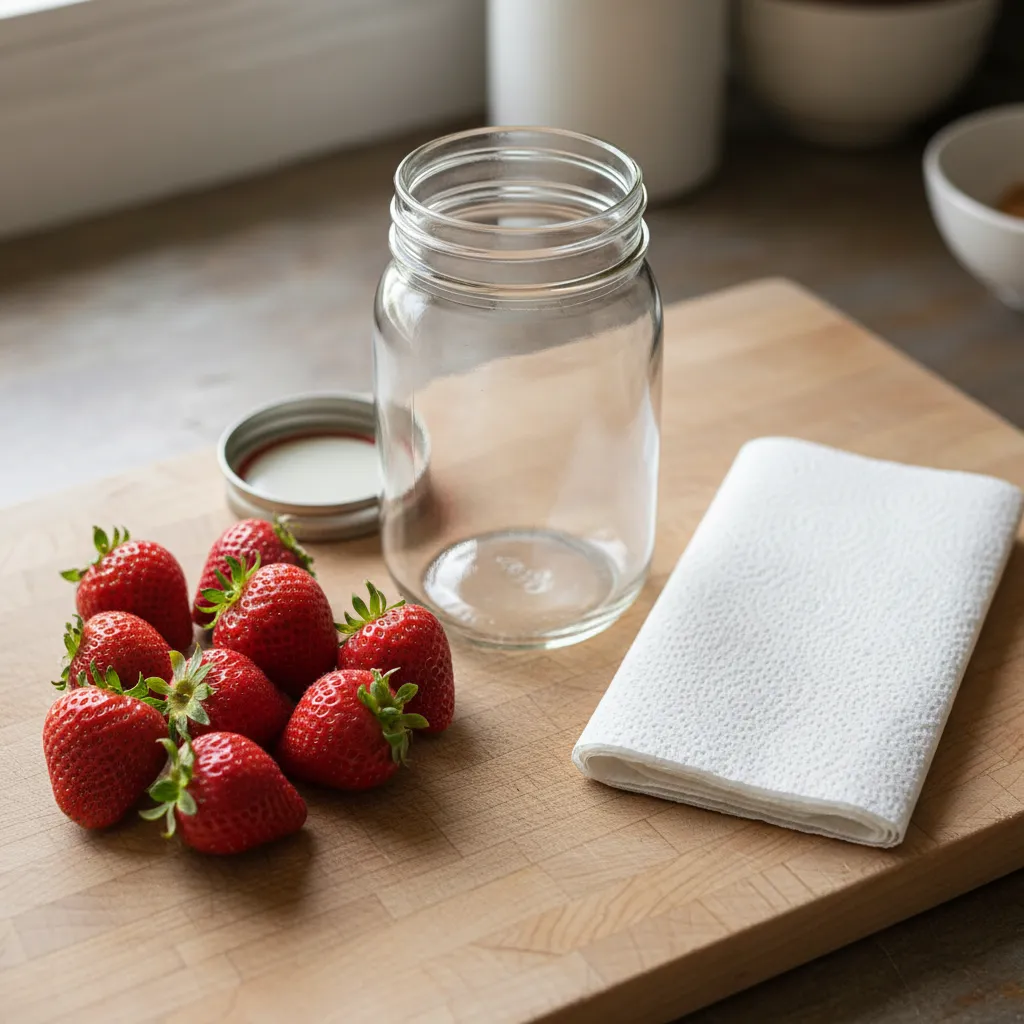
Ingredients
- 2 cups fresh strawberries, unwashed
- 1 wide-mouth glass mason jar (quart size)
- 1 clean, dry paper towel
Instructions
- Inspect your harvest and remove any damaged or bruised fruit immediately.
- Fold the paper towel and gently place it at the bottom of your clean glass jar.
- Carefully place the unwashed fruit into the jar, leaving room at the top.
- Rest the lid loosely on top so trapped moisture and ethylene gas can easily escape.
- Place the prepared jar into the crisper drawer of your refrigerator for chilling.
The Freshness Secret
- Skip the rinse until the very moment you are ready to enjoy your fruit, as any added moisture is the primary enemy of the breathable jar method.
- For maximum airflow, try swapping the solid metal lid insert for a small square of breathable cheesecloth or a coffee filter secured by the screw-on ring band.
- Perform a quick daily visual check through the clear glass; removing a single softening berry immediately will prevent ethylene gas from spoiling the entire batch.
The Strategic Refrigerator Placement Strategy


Where you place your artisanal produce matters. The refrigerator is a dynamic environment with varying temperature zones. Proper placement ensures peak freshness and prevents rapid spoilage.
The middle shelf is the optimal sanctuary for your wholesome berries. Temperatures here remain incredibly consistent. This stability prevents the structural damage caused by unwanted freezing.
Berries are highly perishable and should be stored in the main compartment of the refrigerator, not in the crisper drawers where poor air circulation can accelerate mold growth.
Dr. Marita Cantwell, UC Davis Postharvest Technology Center
Many home cooks instinctively use the crisper drawer. However, this enclosed space traps excess humidity. High moisture levels encourage rapid mold growth on delicate berry skins.
Treat your fresh berries like delicate flowers; keep them cool, dry, and breathing effortlessly on the middle shelf.
Temperature and Airflow Dynamics

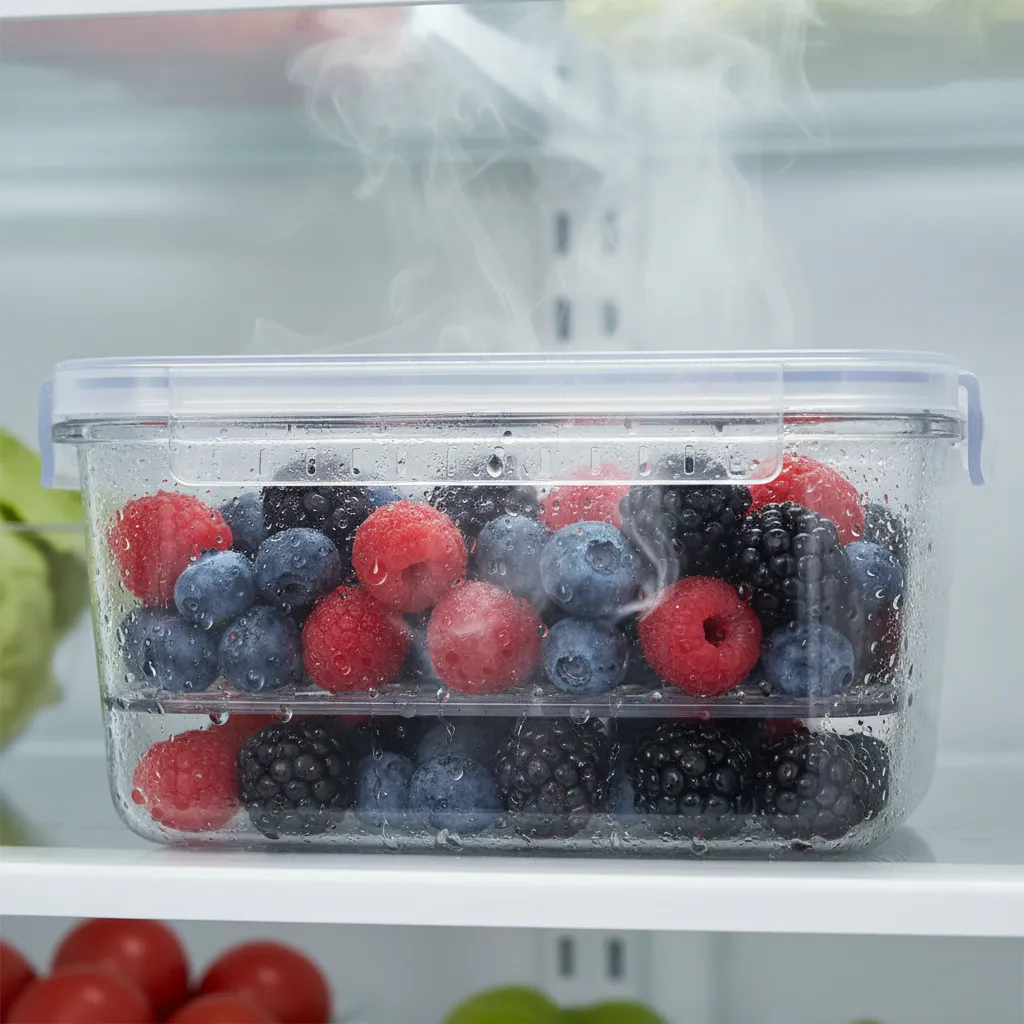
A steady flow of chilled air is crucial for longevity. Position your containers away from the cooling vents. Direct blasts of frigid air can quickly freeze and rupture delicate plant cells.
When properly stored, these vibrant fruits maintain their wholesome texture for days. This gives you ample time to use them in easy healthy spring dessert strawberry cake recipes.
- Middle Shelves: Offers the most stable and consistent temperature.
- Front Placement: Keeps them highly visible so they are never forgotten.
- Away from Vents: Prevents accidental freezing and tragic texture loss.
- Avoid the Door: Constant temperature fluctuations here cause rapid decay.
Maintaining exact temperatures is vital. Keeping your refrigerator exactly at 40 degrees Fahrenheit or below slows bacterial growth effectively. This USDA safety standard guarantees success.
Wholesome Berry Prep Wash

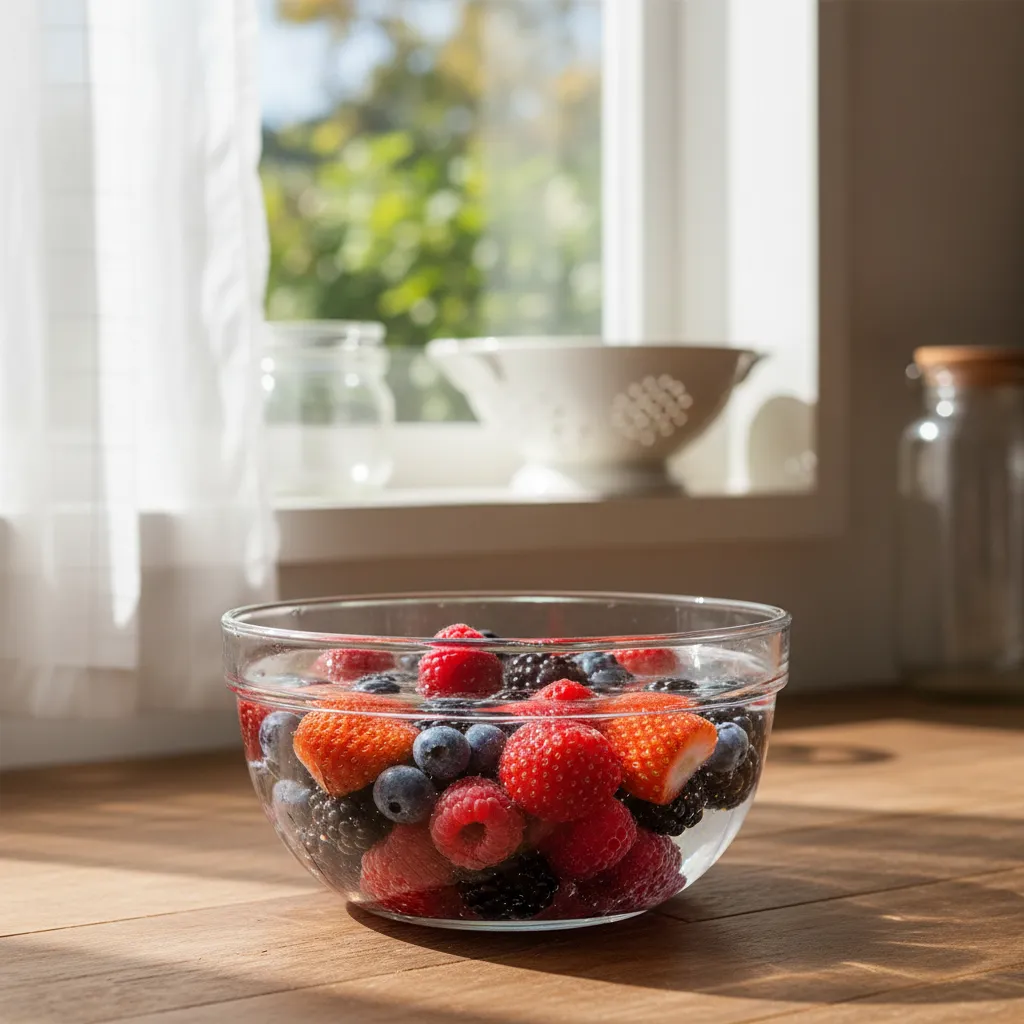
Before strategic placement, a quick organic wash removes field residue and halts early mold spores. Make sure the berries are completely dry before placing them on your middle shelf.
Ingredients
- 4 cups fresh organic berries
- 3 cups cold filtered water
- 1 cup distilled white vinegar
Instructions
- Combine the cold filtered water and white vinegar together in a large, clean glass bowl.
- Submerge the fresh berries completely in the prepared solution for exactly two minutes.
- Rinse thoroughly with cold water in a fine colander to remove any lingering vinegar taste.
- Spread the washed berries in a single layer on clean paper towels to dry completely.
- Once entirely dry, transfer to a ventilated container for immediate refrigerator storage.
Master the Chill Zone
- Leave Some Breathing Room: Never stack berry containers tightly against other items. Proper airflow is essential for preventing the stagnant moisture buildup that leads to premature mold.
- The Paper Towel Trick: Line your ventilated storage container with a dry paper towel. This acts as a moisture-wicking barrier that catches condensation before it can soften the delicate berry skins.
- Eye-Level, Mind-On: Since the middle shelf is the safest spot, place your berries directly at eye level. When they are the first thing you see, you are much more likely to enjoy them at their peak nutritional value.
Savor the Sweetness: Your Harvest, Preserved
Protecting your vibrant, juicy harvest is simpler than it seems. With a quick vinegar bath or thermotherapy, you preserve every ounce of summer flavor.
These mindful techniques destroy hidden mold spores without cooking the delicate flesh. You will enjoy plump, sweet fruit long after market day.
Now, go share those perfect, mouth-watering bowls of joy with your loved ones. Master these simple chef secrets, and say goodbye to fuzzy fruit!
Kitchen Curiosities: Berry Storage Secrets
Yes, washing them right away in a vinegar bath neutralizes mold spores early. This proactive step is crucial for keeping them firm and flavorful.
Not at all! As long as you give them a thorough rinse under cool water afterward, no lingering acetic acid will spoil that beautiful sweetness.
It is absolutely essential. Any residual moisture invites rapid rot. Always let them air dry completely on a clean towel before packing them away.
Handle soft fruit with extreme care. The vinegar soak works, but skip the hot water thermotherapy as it might turn overly ripe flesh into mush.